
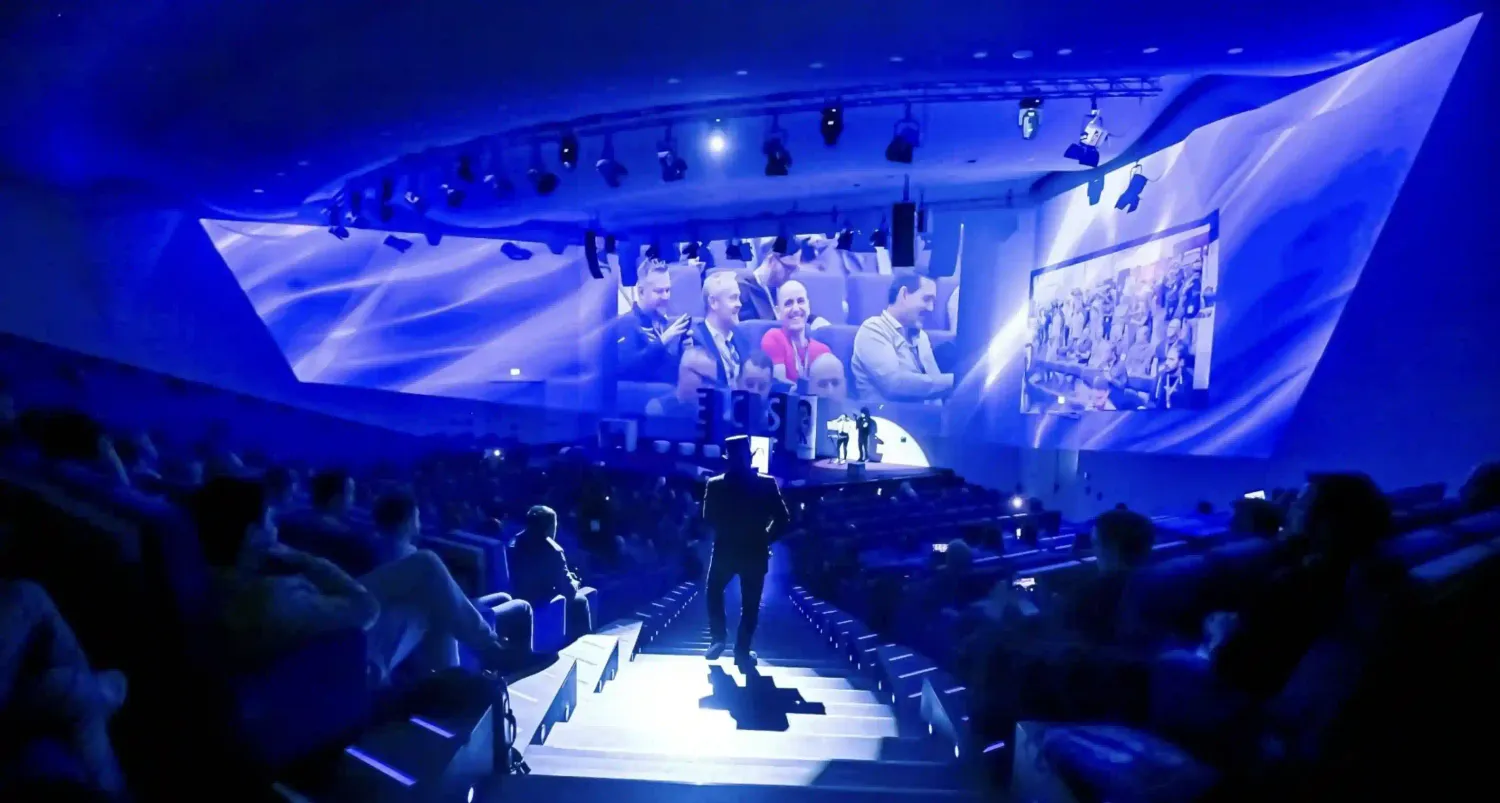
ECS 2025: Orchestrating a Seamless Multi-Conference Experience
In , three co‑located tech summits welcomed 3,000+ attendees, 84 sponsors and 300 speakers to Düsseldorf. With run.events orchestrating every phase, check‑ins averaged less than 8 seconds and real‑time signage, app and streaming delivered a friction‑free experience all without a single critical failure.
Transforming Multi-Event
Coordination at Scale
The European Collaboration Summit, European AI & Cloud Summit, and European BizApps Summit came together from -, in Düsseldorf, offering an unmatched opportunity to dive into over 300 sessions across Microsoft 365, AI, Azure, Power Platform, Fabric, and similar technologies. It's the ultimate opportunity to expand the knowledge and network with top experts in tech and business!
The Challenge
Multi-Summit Coordination Requirements
run.events was tasked with orchestrating three simultaneous conferences requiring seamless coordination across thousands of attendees.
The challenge demanded unified event management, real-time synchronization, and integrated networking capabilities with premium attendee experiences.
Critical Requirements to Address
Unified Platform Solution
Integrated Architecture Approach
Implementation of a unified platform architecture with centralized data management and real-time synchronization.
Single authentication system, shared data layer, and instant updates across all touchpoints eliminated operational complexity while enhancing user experience.
Implementation Results
Strategic Implications for Event Organizers
This case demonstrates that platform unification is not just a technical upgrade but a strategic advantage. By eliminating system fragmentation, organizations can scale operations efficiently while delivering premium attendee experiences that drive engagement and satisfaction.
The platform made it incredibly easy to connect with fellow attendees ahead of the event and stay informed about speaker sessions and schedules.

Badge printing in under 8 seconds meant our 3,000 attendees moved from entrance to keynote without delays. That's the kind of first impression that sets the tone.

The Five-Phase Event Management Journey
From initial concept, over execution to post-event analysis, run.events orchestrated every aspect of the ECS 2025 experience.
Event Planning Phase
We committed to something that sounds impossible: checking in 3,000 people within 45 minutes. Here's how we approached it.
- → Treated the three conferences as one unified system instead of three separate events. This eliminated the usual confusion when attendees couldn't find their registration.
- → Built the entire check-in process around peak arrival times, not average flow. Most people arrive in the first hour, so we designed for that reality.
- → Connected everything from the start: ticketing, schedules, and communications ran off the same system so updates happened everywhere at once.
Key Features

Event Planning Phase
Phase 01
Event Marketing Phase
With run.events we orchestrated every email blast, social post, influencer push and retargeting flow from a single dashboard—tracking every click right down to the ticket sale.
- → Activated organic-influencer campaigns so speakers and sponsors became zero-CPA promoters with personalised referral links
- → Used UTM-based precision tracking to attribute every registration in real-time—no more guesswork
- → Won back abandoned orders through automated retargeting emails and instant voucher offers
Key Features

Event Marketing Phase
Phase 02
Event Registration and Ticket Sales
The CollabCoin system wasn't just gamification for the sake of it. It rewarded meaningful actions: scheduling meetings, joining relevant discussions, planning your agenda.
- → Single registration for all three conferences made it easy to sign up while letting people customize their experience based on their interests
- → Early mobile app access meant people could start networking weeks before arriving: they showed up with meetings already scheduled
- → Gamification that actually worked: points for quality interactions like booking meetings, not just opening the app or scanning badges
Key Features

Event Registration and Ticket Sales
Phase 03
Event Delivery Phase
We hit it. Badges printed in under 8 seconds, queues never exceeded 5 people, and the system held steady under peak load.
- → Self-service kiosks handled the bulk of check-ins with simple QR code scanning, fast badge printing kept lines moving
- → Smart load balancing: real-time displays showed wait times at different stations so people could choose the shortest queue
- → 42 digital displays throughout the venue meant people always knew where to go and what was happening, even when sessions moved or schedules changed
- → Backup systems worked: when popular sessions filled up, attendees got mobile alerts about live streaming in alternate locations
Key Features

Event Delivery Phase
Phase 04
Event Analysis: What We Learned
Success wasn't about the technology, it was about removing friction at every touchpoint.
- → Data collection that actually helps: tracked attendee movement patterns, popular sessions, and networking behaviors to understand what worked and what didn't
- → Heat mapping showed which areas got crowded and which were underused invaluable for future venue planning and traffic flow
- → Lead generation improved because we matched people intelligently instead of hoping random encounters would work
- → High satisfaction came from solving small problems before they became big ones: clear signage, reliable WiFi, and information that was always current
Key Features
Event Analysis: What We Learned
Phase 05
Event Gallery
Experience the ECS 2025 event through our interactive gallery.
Ready to Transform Your Event Experience?
Download our comprehensive brochure to learn how run.events can deliver the same seamless experience for your next conference.
Share this case study: